Occassional thoughts about orienteering
|
|
| okansas.blogspot.com Occassional thoughts about orienteering |
|
|
Saturday, May 02, 2009 Process versus outcomeCompare these outcomes for the baseball pitcher Zack Greinke:Spring training: pitched 28 innings and gave up 30 runs. Regular season (to date): pitched 36 innings and gave up just 3 runs. So in the regular season - in games against the best competition when it really counts - Zack has been much, much better. What is going on? It looks like he was practicing in spring training, trying to learn rather than to do his best. This isn't exactly process versus outcome, but it is related. Here's is a quote from Joe Posnanski's article in SI about Greinke: ...changeup - that's the pitch he spent all of spring training throwing even through hitters battered it like crazy. "He didn't care about the results," Moore [the team's general manager] says. "He just wanted to get a feel for the changeup. That's what's so amazing about Zack. He doesn't need the changeup to be good. He's already good. He worked on it because it can help make him great. And that's what the great ones do." The story of Greinke's spring isn't quite the normal illustration of process versus outcome. The normal illustration is more event based - by focusing on a process during a given competition, rather than the outcome of that competition, the athlete does best. In this case, it is more of a long-term focus. By working on a specific pitch - the changeup - Greinke had to think about the process of the season, beginning with the spring training where the focus was on developing and polishing some specific skill. You'll see the same thing in orienteering. I remember club mates who used club training events to work on some specific skill, often resulting in less than stellar performances in the training. I also remember club mates who used club training events to race - focusing on the results of the training, making every session a race. There were very good orienteers in each group. But the absolute best fit more in the first group than the second. The absolute best didn't necessarily perform the best in the training events. They used to training events to practice, not to race. To use training events to practice and to ignore the results takes some confidence and some comfort with the club. When you're new to a club, you feel like you need to show what you can do. You want to have good results in the training sessions. Once you're a bit more established, you feel a lot less pressure to have a good result in a training event. Back to okansas.blogspot.com. posted by Michael | 10:20 AM 
Wednesday, January 02, 2008 Process versus outcome...and the NY GiantsOne of the key plays in last weekend's Giants game was a long pass by the Patriots to their star receiver, Randy Moss. Moss was wide open. The ball was a little underthown, but hit Moss in the hands. He dropped the ball. If Moss had caught the ball, it'd have been a huge play.The very next play, the Patriots did the same thing. This time Moss caught the ball and scored a touchdown. It put the Patriots ahead and they went on to win the game. The TV announcer said something like, "the Patriots went right back to the same play after it had failed." But, if you think about process versus outcome, you'd have expected the announcer to say something like, "the Patriots went right back to the same play because it succeeded the first time - it got the receiver wide open and the quarterback put it on his hands...he was just unlucky and unable to hang on to the ball." I suspect that the coaches and players for the Patriots were thinking about process rather than outcome. They probably thought, "wow that worked, let's do it again and Moss will catch it." I wonder if the Giants coaches and players were thinking outcome instead of process. They probably thought, "they tried an all-or-nothing play and got nothing - now the Patriots will be worried." Back to okansas.blogspot.com. posted by Michael | 7:47 PM
Tuesday, February 10, 2009 Approach versus outcomeLast year's Kansas basketball team was very good and very experienced. When I listened to the coaches radio show, I was struck by how often he talked about focusing on process versus outcome. He'd say things like, "I don't care if the shot goes in as long as the shot was a good one to take."It seems to me like the coach - Bill Self - isn't talking about process versus outcome as much this season. Instead, he seems to be talking about "approach" versus outcome. Tonight he talked about the need for the inside players to "attack the rim" on offenses. He talks about being "tough" and "aggressive." It struck me that emphasizing approach, rather than process, might reflect the fact that this year's team is very inexperienced. Self's model of how players develop might look something like this: Inexperienced - focus on developing a good approach Experienced - focus on developing a good process And this model would, I think, make sense for orienteers. Back to okansas.blogspot.com. posted by Michael | 7:55 PM
Wednesday, December 19, 2007 Process versus outcomeParaphrased from tonight's Bill Self radio show:At this time of the year, it is better to do things right and have the other team score than to do things wrong and have them miss. Process versus outcome! One of my favorite themes. We're about 1/3rd of the way through the basketball season. I guess from Self's perspective, the last part of the season the equation will change and outcome will be more important. And presumably, he feels that focusing on process will ultimately put the team in a better position to have the best outcome in the last part of the season. Back to okansas.blogspot.com. posted by Michael | 7:16 PM
Tuesday, May 08, 2007 "I choked, I caved under the pressure..."I choked. I caved under the pressure, so I started to collect data from Olympians. What they were telling me was a lot different than what I thought. I was trying as hard as I could on every shot to get it in the 10 ring. I was very outcome oriented, and the Olympic champions were telling me not to be outcome oriented, not to try to win. They said you should try to execute. The process is more important than the outcome.The quote is from a guy named Lanny Bassham. He's talking about his experience in the 1972 Olympics where he competed in shooting. At the next Olympics, he won. I came across the quote in a NY Times article about Bassham's work with professional golfers. The quote struck me as relevant for a lot of situations, including orienteering - the idea of focusing on process rather than outcome. I Googled Bassham and came across his web page where he sells his ideas in a wide range of applications, from shooting to golf to "dog sports" to beauty pageants. Back to okansas.blogspot.com. posted by Michael | 8:18 PM
Thursday, May 13, 2010 Outcome v process"It's easy to think about how the world could be better than it is. What is amazing to me, that being the case, is how much time and energy are devoted to inarticulate battles about the process of change, and how little time is spent thinking about how the world could be better than it is."That's Bill James. I'm a big believer in the idea that individuals should focus on process rather than outcome. But, groups of people often get so bogged down in process - especially when they are contemplating changes that have yet to happen - when the groups would be better off worrying about defining outcomes. Back to okansas.blogspot.com. posted by Michael | 8:44 PM
Thursday, August 23, 2007 Focus on the ProcessSandra wrote about her sprint race (where she qualified for the final):Of course I thought about the possibility of qualifying, but I was more focused on having a good race. In the finish I was very happy to have achieved a solid, good race. I felt like I had raced at my potential for the first time at WOC.... I have to admit that I had to spend a lot of mental energy not to think about trying to qualify and to concentrate on the process. I think this is the biggest challenge we face when we are at WOC, we want to make the final, and that becomes our focus, putting a little extra pressure on ourselves and therefore not being able to focus on the orienteering. Focusing on the process helped me a lot today. The idea of process versus outcome focus is something of a theme on this blog, see, for example, this post from a few of months ago. Epi Reading the reports of the runners at the World Champs getting sick makes me wonder: Is anyone doing an epidemiological investigation to track down the cause of the apparent outbreak? Seems like something worth doing... Back to okansas.blogspot.com. posted by Michael | 6:59 PM
Tuesday, January 24, 2006 Discussing goalsKristiansand OK has been talking about goals for 10-Mila. Here is a bit (roughly translated):"It is important that we don't set too high a goal, because that won't work. We have a goal of being among the top 5, and that's what we should focus on. But, the runners also have a dream of winning," says Holger Hott-Johansen. Jon Duncan, who has won 10-Mila three times with Halden supports Hott-Johansens opinion. "It is important that we don't feel pressure that we have to win 10-Mila [warning: very roughly translated and I might have gotten it a bit wrong], because that can have negative consequences. We have to focus on the task and building up a good team together. That will have positive consequences and results," says Duncan. Asle Kregenes is a new part of the clubs trainer-team and he thinks Kristiansand can't be too defensive. "We have to dare to talk about winning 10-Mila, otherwise we won't."....That opinion is supported by Jack Bjornsen [also a club trainer, I think], "we can't be afraid to set too high a goal." The discussion and the tension between outcome and process goals is fascinating. Personally, I prefer process goals (which is what I think Duncan is talking about). I like having goals like, "do x, y and z to make sure we are prepared to do our best at 10-Mila." I also like combining process goals with a "story." The story being concise answers to three questions: 1. Where have we been? 2. Where are we now? 3. Where are we going? (and I'd focus on process descriptions to answer this last question). But, that is just me. Tonight's training 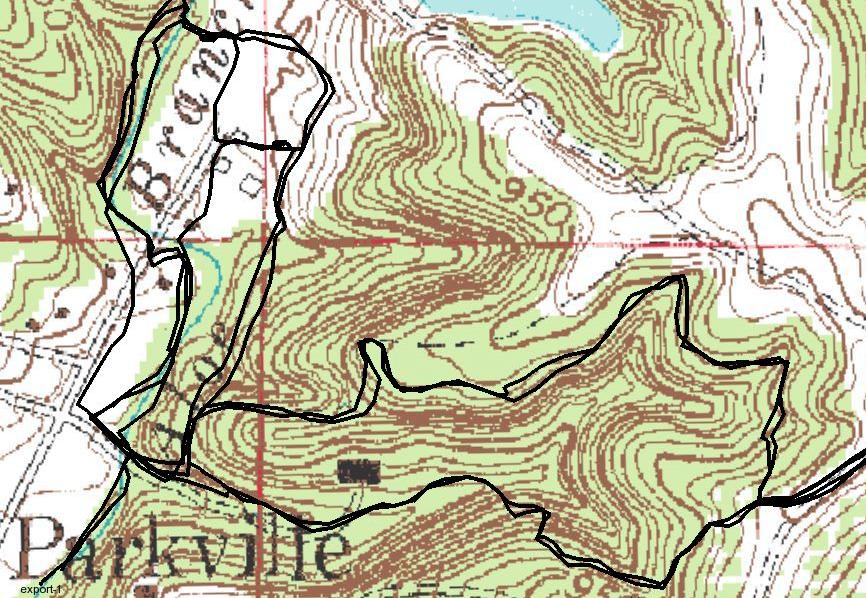 posted by Michael | 7:34 PM
Tuesday, June 05, 2007 Lowering expectationsI hate the summer. It gets hot. The forest gets incredibly thick. Ticks, spiderwebs, and poison ivy fill the forests.At least that is what happens around Kansas City. Every year I have an idea that this year I'm going to have a good summer of running. Sometimes it starts out well. But then the heat wears me down and the months of July and August just drag on and on. This year I've got a new strategy - lower my expectations. Instead of being ambitious about running, I'll just take it easy. Maybe, just maybe, that'll leave me feeling less drained in July and August and I'll actually finish the summer in better shape than usual. More on process versus outcome Last month I wrote something about process versus outcome. A few days ago I came across an article by Michael Mauboussin - a "chief investment strategist" - that touches on the some of the same ideas, but in a different context. Check out Mauboussin's "Turtles in Omaha" (PDF). Another "miniature" photo This is the view out my office window. Click on the image for higher resolution.  Back to okansas.blogspot.com. posted by Michael | 8:19 PM
Wednesday, June 20, 2007 Busy day = lazy bloggerI had a long, busy day at work. That means I don't have much time to spend writing about orienteering. The lazy way out is to point to another page with something that might be relevant to orienteering....Well, it isn't quite orienteering, but the issue of process-versus-outcome comes up in other sports, too. Here is a series of baseball related postings on process-versus-outcome. Back to okansas.blogspot.com. posted by Michael | 9:24 PM
Sunday, November 15, 2009 Process versus outcome - college basketballI came across a report of the first Kentucky basketball game of the season and coach John Calipari's reaction to it. He wasn't upset about 26 turnovers and 15 missed three point shots. He was upset with not playing hard on every possession.I expect that as the season goes along, a college basketball coach becomes more concerned with outcome. But in developing the players, the focus begins with process. Back to okansas.blogspot.com. posted by Michael | 8:52 AM
Wednesday, March 19, 2008 What else? Process versus OutcomeI listened to a press conference with Bill Self while I was driving home from tonight's jog. Self said [roughly, I didn't write it down at the moment}:You can tell a shot is a good shot the minute it leaves your hand. It doesn't mater if it goes in or not. For the non-KU basketball fans out there, Self is talking about a shot in basketball and is making the point that the most important thing to judge is whether the shot was good rather than whether it went it the basket. Some good shots won't go in the basket. Some bad shots will. But over time, more good shots will go in compared to bad shots. As a basketball coach, you design your offense to get good shots. Process versus outcome. Try this little experiment the next time you watch a basketball game. As soon as a player takes a shot, rate it as "good," "bad," on "not sure." It is a fun way to watch a game (if you're a real geek, write down your rating for each shot). You can come up with you're own criteria for "good" and "bad" - but basically, a bad shot is one from a long way away (especially just inside the 3-point line), closely guarded by a defender (especially a defender taller than the shooter), when the shooter is moving, and when no offensive players will have a chance to get a rebound. A good shot is the opposite. Back to okansas.blogspot.com. posted by Michael | 8:19 PM
Saturday, May 16, 2009 Learning to danceI came across this process-v-outcome quote yesterday:any method that encourages...to focus on the process of what they are doing rather than what others are doing (i.e., comparing themselves to others) would be beneficial in helping...attend to relevant cues and improve their skills. The authors of the quote created a a two page questionnaire to fill out after a training to rate yourself on a set of skills. Filling out the questionnaire encourages "self reflection." Now, the authors aren't writing about orienteering. They're writing about Salsa dancing. The approach could be easily adapted to orienteering - just change the skills and develop good descriptions of what constitutes "poor performance" and "good performance." Check out the PDF Success in Salsa: Students' Evaluation of the Use of Self-Reflection When Learning to Dance and see if you can adapt it to orienteering training. Back to okansas.blogspot.com. posted by Michael | 2:44 PM
Tuesday, June 26, 2007 "Improving your results by ignoring them""Improving your results by ignoring them." That's the title of an article I read this afternoon. Now the article was about baseball. Not just baseball but fantasy baseball. But, I think the concept is something I'm a believer in. It is really just another way of saying "focus on process not outcome."It is also a good way to put the ideas in Martin Lerjen's "visionary head start" to use. Use the map reading categories to develop a better understanding of the process you follow when you orienteer. Back to okansas.blogspot.com. posted by Michael | 7:59 PM
Wednesday, June 21, 2006 Process and outcomeKristiansands OK hasn't performed as well as they'd expected at TioMila and Jukola over the last few years. I read some thoughts about the team performance over on Kristian Dalby's blog (all in Norwegian). I don't have the energy to translate the entire bit, but to give you an idea, he titled it "Kristiansand OK, the world's worst relay team?"In the comments following the post, Dalby wrote (in my quick, rough translation): My point is that we haven't gotten out what we should from the team and that we should do something about that. Who ran well and who ran poorly, who should be blamed or not, doesn't matter. The team and the club stand together for the result, it is the result that matters and everyone involved, runners and leaders, has some responsibility for the results to be as good as possible. I have as much responsibility as anyone. Watching the discussion unfold is interesting. To some extent, they've got to deal with the problem of separating process (i.e. how they prepare) from the result (i.e. weaker than expected relay results). posted by Michael | 8:50 PM
Wednesday, January 16, 2008 Some idle speculationI read about a psychology study where the researchers compared two groups of students. One group was praised for putting in a good effort. The other was praised for being smart. Basically, one group was focused on process and one on outcome. The researchers then gave the groups two other exercises to pick from. One exercise was more challenging and had the potential to push the students. It turned out that the group praised for effort was more likely to pick the more challenging task in the second round. The group praised for being smart was more likely to pick the easier task.What might this have to do with orienteering? Well, it might be interesting to compare runners who are praised for having "talent" with runners who are praised for "training hard." See which group eventually performed better. One possibility - if the research described above holds - is that the group praised for being talented might be more likely to race against weaker competition, where they could get good places even if they didn't perform as well. The group praised for training hard might test themselves against tougher competition. It is easy to speculate, but hard to know what would actually happen. *Unfortunately, I can't remember where I read about the experiment. I can't provide a reference. If I come across it, I'll try to post some more info. Back to okansas.blogspot.com. posted by Michael | 7:29 PM
Friday, October 05, 2007 Some words from HeliAn email arrived with a translation of a bit of the Finnish TV interview with Heli Jukkola. Keep in mind that Heli spoke Finnish, which was translated to Swedish, which I'm translating (quickly) to English. Certainly Heli's comments lose something in that chain of translation.How do you prepare yourself before a competition and what is the most important thing you think about before a competition? All kinds of things go through your head before a race. But there must be some limits? Yes. And that is was the preparation is about. In the last month before a race I think about everything that might happen during the competition. Then as I get closer to the competition I narrow the field months - thinking about fewer and more important things. And just before the performance, I try to think only of how I'm going to complete the race and NOT AT ALL about my goals; or how my preparation and training has gone; or if I'm in good form or not. I think ONLY about the peformance - the type of the competition and how I will orienteer. I might be missing something in the translation, but it sounds like Heli is talking about focusing on process rather than outcome. Back to okansas.blogspot.com. posted by Michael | 7:06 PM
Sunday, August 03, 2008 A few notes on goalsI've been thinking a bit about goals. Nothing concrete, but I thought I'd put down a few random thoughts:1. One of the Olympic diving coaches was talking about something he called the "50 percent rule." The US could realistically have 6 medal chances, so a good Olympics would be to get 50 percent of that. 2. All of the US WOC goals are outcome goals. I think there is some room for process goals. But, that might be just me. 3. Personally, I like the idea of using the peer nations to set some performance goals. I can imagine a US WOC team having a goal of improving the win-loss record compared to the last couple of WOCs. Using head-to-head win-loss records has some nice features (like it counts everyone who starts a race and it means a runner has a chance to help the team as a whole even if they make a boom that would knock them out of contention for qualifying for a final). But, using the peer nations has a huge disadvantage....nobody (except me) cares about it. Goals that nobody cares about are pretty much worthless. That's enough for now. Back to okansas.blogspot.com. posted by Michael | 6:14 PM
Wednesday, August 25, 2010 Relaxing before the big raceFrom a NY Times article on research about music and exercise:Just how music impacts the body during exercise, however, is only slowly being teased out by scientists. One study published last year found that basketball players prone to performing poorly under pressure during games were significantly better during high-pressure free-throw shooting if they first listened to catchy, upbeat music and lyrics (in this case, the Monty Python classic “Always Look on the Bright Side of Life”). The music seemed to distract the players from themselves, from their audience and from thinking about the physical process of shooting, said Christopher Mesagno, a lecturer at the University of Ballarat in Victoria, Australia, and the study’s lead author. It freed the body to do what it knew how to do without interference from the brain. “The music was occupying attention that might have been misdirected otherwise,” Mr. Mesagno said. It reminds me a bit of Carl Waaler Kaas' description of his pre-race smile: The smile. A lot of people have commented my smile at the start line. I have been told that when they saw the smile they knew I would perform well. That the smile and my attitude made me look confident and calm. But was it planned? Yes, the smile was planned. This race was my most important individual race this year, the one race I had been training for for a long, long time. When entering such a race you have (in my opinion) two possibilities: To be afraid of spoiling this single opportunity or to enjoy the race and the opportunity that you have been given. In my mind this choice was quite simple. I knew that if I did not manage to enjoy the race, I would not be calm enough to take the right choices during the race. If the word mistake came to my mind the most possible outcome was me doing a mistake. By “forcing” myself to smile at the start I gave myself the signal I needed: I am here to enjoy a race for which I have prepared for and dreamed of for (at least) 4 years! Back to okansas.blogspot.com. posted by Michael | 8:46 PM
Wednesday, May 10, 2006 "Deliberate Practice"An article in Sunday's NY times looked at research on what makes someone really good at something, like sports of music. Here are two short quotes:And the best way to learn how to encode information meaningfully, Ericsson determined, was a process known as deliberate practice. Deliberate practice entails more than simply repeating a task --? playing a C-minor scale 100 times, for instance, or hitting tennis serves until your shoulder pops out of its socket. Rather, it involves setting specific goals, obtaining immediate feedback and concentrating as much on technique as on outcome. And another quote that caught my eye: Ericsson's research suggests a third cliche as well: when it comes to choosing a life path, you should do what you love Â? because if you don't love it, you are unlikely to work hard enough to get very good. Most people naturally don't like to do things they aren't "good" at. So they often give up, telling themselves they simply don't possess the talent for math or skiing or the violin. But what they really lack is the desire to be good and to undertake the deliberate practice that would make them better. This sounds very relevant to orienteering. And it reminds me of something I wrote about talent a month or so ago. The idea of "deliberate practice" is something I want to learn more about. I've downloaded a paper by K Anders Ericsson (they Ericsson referred to in the NY Times). I haven't read it yet, but I'm hoping to learn somethiinterestinging. You can find more information and links to some papers over at Freakonomics.com. posted by Michael | 8:57 PM
|
|
|
|
|
|
|
 |
||||
|
|||||